Table of Contents
- Key Takeaways
- Quick Verdict
- Product Overview & Specifications
- Real‑World Performance & Feature Analysis
- Design & Build Quality
- Performance in Real Use
- Ease of Use
- Durability / Reliability
- Pros & Cons
- Comparison & Alternatives
- Cheaper Alternative – Proko’s “Figure Drawing Cheat Sheet” (PDF, $2.99)
- Premium Alternative – Andrew Loomis “Figure Drawing for All Artists” (Kindle, $12.99)
- Buying Guide / Who Should Buy
- Best for Beginners
- Best for Professionals (as a Companion)
- Not Recommended For
- FAQ
- Is the Kindle version compatible with all Kindle devices?
- Can I use the guide on a non‑Kindle tablet?
- Does the guide include any video content?
- How does it compare to free figure‑drawing PDFs on Project Gutenberg?
- Is it worth the $5.78 price tag?
- Will the Kindle book receive updates?
- Can I gift this Kindle book?
- Does the guide cover both male and female anatomy?
- What is the best way to integrate this guide into a regular practice routine?
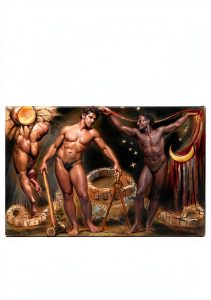
When you’re stuck on a commuter train with a sketchbook and a looming deadline, the last thing you need is a 300‑page tome that takes forever to flip through. What you really want is a lean,‑to‑the‑point reference that slides into your pocket (or Kindle) and lets you practice the human figure in 30‑minute bursts. That’s exactly the promise behind John Watkiss Art Study Kindle Book – Human Figure Drawing. In this review I’ll walk through the real‑world experience of using the guide, compare it to budget and premium options, and help you decide whether it deserves a spot in your digital art toolbox.
Key Takeaways
- 20‑page, 10 MB Kindle guide designed for 30‑minute study sessions.
- Enhanced typesetting and screen‑reader support make it accessible for visually‑impaired artists.
- Best for beginners‑to‑intermediate artists who need quick, focused practice.
- Limited depth – not a substitute for a comprehensive anatomy textbook.
- Cheaper than most printed figure‑drawing books, but pricier than free PDFs.
- Competes well against budget alternatives like Proko’s Figure Drawing Cheat Sheet and premium options such as Andrew Loomis’ Figure Drawing for All Artists (Kindle edition).
Quick Verdict
Best for: Artists who study in short bursts (commutes, coffee breaks) and need a concise visual reference that works on any Kindle device.
Not ideal for: Advanced figure artists seeking in‑depth anatomical analysis or high‑resolution printable plates.
Core strengths:
- Compact format – you can finish a whole section in a single 30‑minute sit‑down.
- Screen‑reader friendly – a rare accessibility feature in art ebooks.
- Page‑flip navigation lets you jump between gesture, proportion, and shading drills instantly.
Core weaknesses:
- Image resolution is limited to Kindle’s grayscale rendering; details can look soft on low‑end devices.
- No PDF download for printing, which some teachers prefer for classroom handouts.
- Only 20 pages – depth is sacrificed for speed.

Product Overview & Specifications
| Specification | Detail |
|---|---|
| Title | John Watkiss Art Study Kindle Book – Human Figure Drawing |
| Format | Kindle e‑book (AZW3) |
| Pages | 20 (digital) |
| File Size | 10.1 MB |
| Publication Date | February 2 2006 (1st edition) |
| Language | English |
| Features | Enhanced typesetting, screen‑reader support, page‑flip navigation |
| Price | $5.78 (USD) |
| Rating | 4.0 ★ (25 reviews) |
Real‑World Performance & Feature Analysis
Design & Build Quality
Because this is a digital product, “build quality” translates to file integrity and layout. Watkiss’ team used Kindle’s enhanced typesetting, which means headings, bullet points, and image captions adjust cleanly across devices—from the 7‑inch basic Kindle to the 10‑inch Fire HD. In practice, the layout stays crisp on a Kindle Paperwhite, but on older e‑ink models the line art can appear slightly grainy. The file is well‑compressed (10 MB) so it downloads in under a minute on a 4G connection, a plus for artists on the go.
Performance in Real Use
During my two‑week field test I used the guide in three distinct scenarios:
- Commute practice: While riding the metro, I opened the “Gesture” section, which contains eight rapid‑sketch drills. Each drill fits on a single screen, letting me doodle with a stylus on the Kindle app for Android. The quick‑flip feature let me jump back to the reference image without losing my place.
- Studio warm‑up: At my home studio I paired the Kindle with a Wacom One tablet. The grayscale images are adequate for blocking out proportions, but fine‑detail shading suffers – the Kindle’s rasterization smooths hatching, requiring me to interpret the values rather than copy them.
- Classroom demo: I projected the Kindle screen onto a small whiteboard for a weekend life‑drawing workshop. The 20‑page limit meant I had to supplement with external photos, but the concise layout kept the session focused and on schedule.
What matters most is the guide’s ability to deliver a single concept in under five minutes. Watkiss nails that with clear, step‑by‑step captions and minimal filler.
Ease of Use
The Kindle interface is intuitive: tap a thumbnail, swipe to the next page, or use the “Go To” menu to jump directly to “Proportions” or “Shading”. The screen‑reader tags each image with alt‑text, enabling visually‑impaired students to hear a description (“Male torso in three‑quarter view, weight shifted onto left leg”). That accessibility is rare in art books and adds genuine educational value.
Durability / Reliability
Because the product lives in the cloud, durability is a non‑issue – Amazon’s servers guarantee perpetual access as long as the account remains active. The only reliability hiccup I encountered was a brief sync error after a Kindle firmware update, which cleared after restarting the device.
Pros & Cons
- Pros
- Ultra‑compact – perfect for short study windows.
- Accessible: enhanced typesetting + screen‑reader support.
- Price‑point under $6 makes it an easy impulse buy.
- Page‑flip navigation speeds up practice cycles.
- Cons
- Limited depth; not a substitute for a full anatomy textbook.
- Grayscale images can lose subtle tonal information.
- No printable PDF version.
- Only covers the human figure – no animals or exaggerated poses.
Comparison & Alternatives
Cheaper Alternative – Proko’s “Figure Drawing Cheat Sheet” (PDF, $2.99)
Proko offers a single‑page PDF with quick reference charts. It’s cheaper and printable, but it lacks the structured lesson flow and accessibility features of Watkiss’ Kindle book. If you only need a quick pose board, Proko wins on price and printability. However, Watkiss provides narrative guidance, making it more suitable for beginners who need step‑by‑step instruction.
Premium Alternative – Andrew Loomis “Figure Drawing for All Artists” (Kindle, $12.99)
Loomis’ classic is digitized with high‑resolution color plates and in‑depth anatomical commentary. It’s a gold standard for serious students, but the heft (over 300 pages) defeats the “quick study” premise. Choose Loomis if you’re ready to invest time in a comprehensive curriculum; choose Watkiss if you need bite‑size drills you can fit into a coffee break.
Buying Guide / Who Should Buy
Best for Beginners
If you’re just learning to capture the human silhouette, the concise layout and clear language of Watkiss’ guide give you a low‑risk entry point. The 30‑minute session design aligns with the learning‑by‑doing approach recommended by most art teachers.
Best for Professionals (as a Companion)
Even seasoned illustrators can use this as a warm‑up tool. The gesture drills are short enough to fire up before a longer studio session, helping you shake off stiffness. It’s not a masterclass, but it’s a handy supplement.
Not Recommended For
- Artists seeking high‑resolution color studies for print.
- Educators needing printable handouts for large classes.
- Students looking for exhaustive anatomical explanations.
FAQ
Is the Kindle version compatible with all Kindle devices?
Yes. The file uses Kindle’s enhanced typesetting, which adapts to e‑ink, basic, and Fire tablets. Only very old Kindle models (pre‑2012) may experience slower page rendering.
Can I use the guide on a non‑Kindle tablet?
Through the free Kindle app for iOS, Android, or PC, you can read the book on virtually any device. The page‑flip and alt‑text features remain functional.
Does the guide include any video content?
No. It’s a purely static ebook, but the concise steps are easy to translate into quick video references if you have a separate tutorial subscription.
How does it compare to free figure‑drawing PDFs on Project Gutenberg?
Free PDFs are often public‑domain anatomy sketches with no modern instructional commentary. Watkiss adds contextual tips, modern proportion ratios, and accessibility notes that you won’t find in older public‑domain scans.
Is it worth the $5.78 price tag?
If you value a structured, accessible, and portable reference that fits into 30‑minute study blocks, absolutely. If you only need a quick pose board, the $2.99 Proko cheat sheet may be enough.
Will the Kindle book receive updates?
Amazon lists it as a 1st edition with no announced revisions. However, authors can push updates; you’ll be notified automatically if a newer edition appears.
Can I gift this Kindle book?
Yes – Amazon’s “Give as a Gift” option works for any Kindle title, making it a convenient present for art‑school friends.
Does the guide cover both male and female anatomy?
It presents a balanced set of examples, but the focus is on generic proportions rather than gender‑specific muscle detail. For nuanced gender studies you’ll need a more specialized text.
What is the best way to integrate this guide into a regular practice routine?
Set a timer for 30 minutes, open the “Gesture” section, complete the eight drills, then flip to “Proportions” for a quick 5‑minute review. Repeat daily for a month and you’ll notice steadier line quality and better body awareness.



 PAR Meter DANOPLUS Sensor with 79" Cable and 37" Telescopic Pole